
Jump Starter vs Battery Maintainer: Which Problem Are You Solving?
Research-based buying advice. Product sources checked 2026-10-28. This is not a hands-on review. Recommendations are our interpretation of the documented features and the use cases discussed below.
Write down the problem first
“My car sometimes will not start” is a symptom, not yet a shopping specification. Is the vehicle parked for long periods, used for short trips, or failing unexpectedly despite normal use? Record the pattern and have recurring trouble diagnosed. Buying a second device without understanding the first problem can leave you with more equipment and the same unreliable vehicle.
For starting assistance away from an outlet
A portable jump starter carries stored energy to help start a compatible vehicle. The GB40 is one example intended for 12 V lead-acid vehicle batteries. Its usefulness depends on compatibility, its own charge and following the vehicle and pack instructions. It is not a universal solution to any no-start condition, and a successful start does not establish that the vehicle battery is healthy.
For a vehicle that spends time parked
A mains-powered maintainer is the different purchase to investigate when the goal is keeping a compatible battery ready during storage. Consider the parking location and outlet before comparing brands. The GENIUS2 and GENIUS5 offer different charging outputs; the battery and routine determine which belongs on your shortlist. Do not compare their charger amperage directly with a jump starter’s peak-current headline.
When owning both can make sense
A seasonal car stored near an outlet and a daily driver used far from home create two distinct needs. One device may stay in the storage location while the portable pack travels with the daily driver. That is a practical reason to consider both, rather than buying a bundle because the labels sound related. If neither scenario applies, diagnosis or a different charging routine may be the more useful first step.
Include upkeep in the decision
For a jump starter, plan a reminder to inspect and recharge it according to its manual, and choose a storage location within its temperature limits. For a maintainer, plan a protected mains connection and a cable route that can be inspected without moving the vehicle. Check the exact accessories included before ordering. Avoid buying on the assumption that a generic cable or connector will fit.
Before the next cold morning
Read the instructions while conditions are comfortable, identify the vehicle’s designated connection points and keep the manuals accessible. Never try to charge or jump-start a frozen, leaking or damaged battery. If the condition is uncertain, get qualified assistance. Our product links support comparing equipment; this article is not a replacement for the vehicle’s procedure.
About the illustration
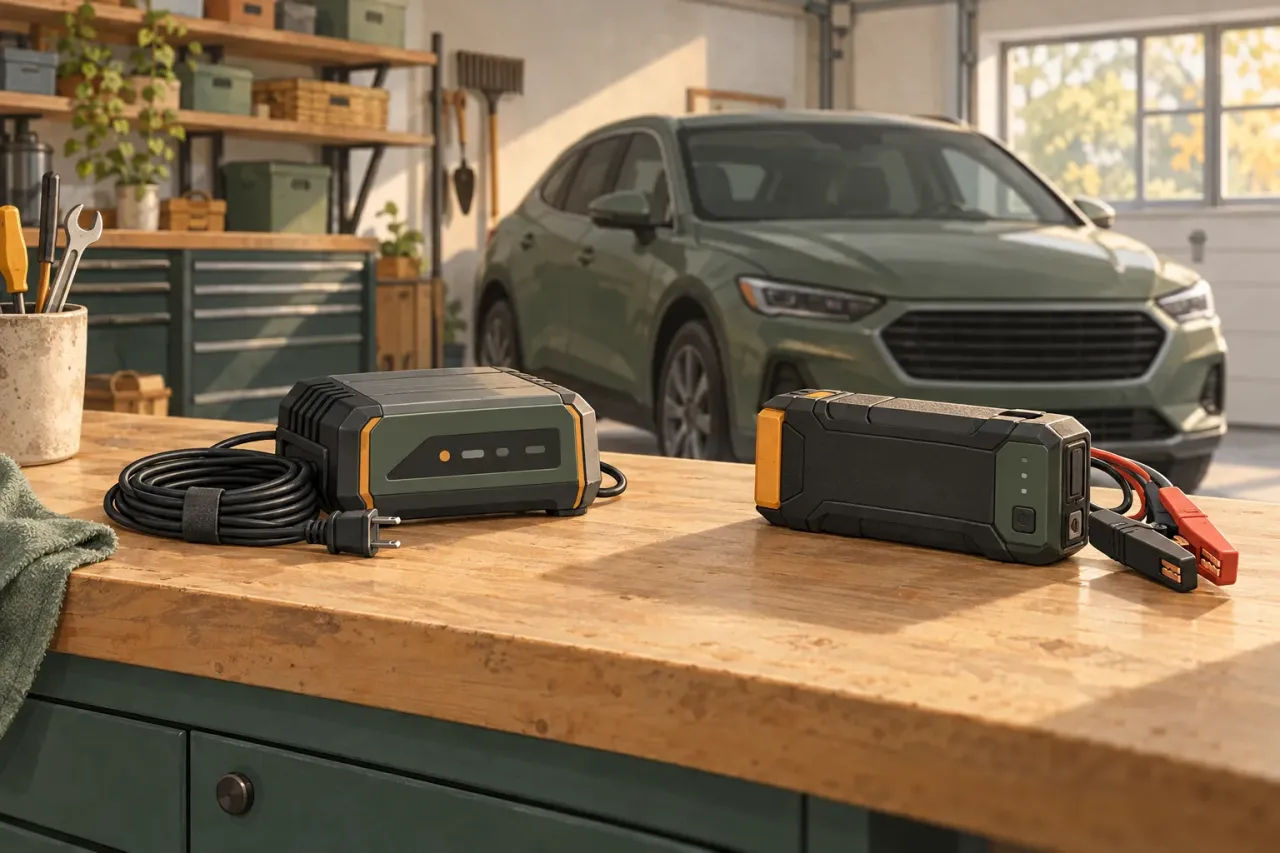
The cover is an AI-generated editorial illustration of the topic. It does not depict the exact products and is not evidence of hands-on testing.
Sources and further reading
- NOCO GB40 — manufacturer specifications
- NOCO GB40 — support and jump-start instructions
- NOCO GENIUS2 — manufacturer specifications
- NOCO GENIUS5 — manufacturer specifications